Pour Decisions: How the Vodka You Choose Quietly Builds Your Tribe
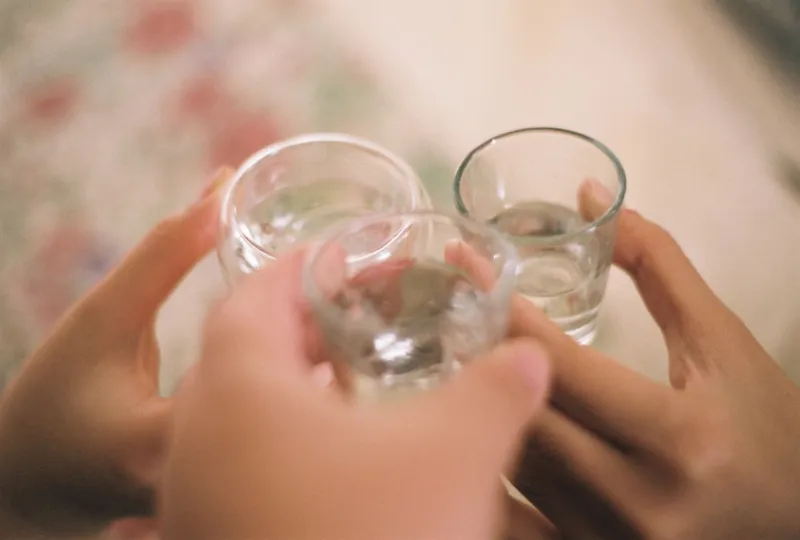
There's a moment at almost every party where someone glances at what you're holding and makes a silent judgment call. Not a harsh one, necessarily — more like a quick calibration. Oh, we're that kind of crowd tonight. It happens fast, and most people don't even realize they're doing it. But social psychologists will tell you it's ancient wiring at work: we scan for signals, and what's in your glass is one of the clearest ones you're broadcasting.
So what does it mean when that glass holds something premium? Something chosen, rather than grabbed?
The Signal Before the Conversation
Dr. Priya Menon, a social psychologist who studies identity signaling in consumer behavior, puts it plainly: "What we consume in social settings is rarely just about the product itself. It's about affiliation. It's about saying, without words, I have standards — and seeing who nods back."
That dynamic plays out constantly in American nightlife and home entertaining. Someone who reaches past the well vodka and asks for something specific is communicating intentionality. They've thought about this. And that kind of deliberateness tends to magnetize other deliberate people.
It's not snobbery — or at least, it doesn't have to be. It's more like tuning a radio frequency. You're not shutting anyone out; you're just making it easier for the right signals to find you.
Shared Taste as Social Glue
Mixologist and bar consultant Dani Reeves, who has worked in Chicago, Austin, and New York, has watched this phenomenon play out from behind the stick for over a decade. "You start to notice patterns," she says. "Groups that care about what they're drinking tend to care about a lot of other things too — the music, the food, the conversation. It's not a coincidence. Taste in one area usually reflects taste across the board."
Reeves describes what she calls the "vodka table" effect at upscale venues: when a group orders a premium bottle for the table, it changes the energy. People lean in. They get curious. Someone asks how to make a proper Moscow Mule versus the syrupy approximation they've been served elsewhere. A conversation starts. Connections form.
"I've watched friendships start over a bottle," she says. "Real ones. The kind that outlast the night."
This tracks with research on shared rituals and bonding. When people engage in a communal experience — and yes, choosing and pouring from a specific bottle counts — they form faster, stronger social bonds than they would through conversation alone. There's something about the physical act of sharing a pour that bypasses the usual social friction.
Does the Vodka Attract the Person, or Does the Person Attract the Vodka?
Here's where it gets interesting: is it that premium vodka drinkers find each other, or that the vodka itself creates a kind of community gravity?
The honest answer is probably both, and they reinforce each other.
People who prioritize quality in their spirits tend to come pre-loaded with certain values: curiosity, a willingness to invest in experiences over things, an appreciation for craft. Those values don't come from the bottle — they were already there. But the bottle becomes a shorthand, a visible marker that helps like-minded people recognize each other across a crowded room.
At the same time, the ritual of drinking intentionally — reading about what you're consuming, trying different expressions, mixing thoughtfully — actively builds community around it. You start following the same accounts, frequenting the same bars, attending the same tasting events. The social circle forms through shared practice, not just shared preference.
It's the chicken-and-egg question that turns out not to matter much, because the outcome is the same either way: people who drink with intention tend to end up surrounded by other people who live with intention.
The Cultural Signifier Nobody Talks About
Spirits have always functioned as cultural markers — bourbon in certain Southern circles, tequila in others, Scotch in the boardroom-adjacent crowd. Vodka's positioning has shifted dramatically over the past decade, and with it, the community it signals membership in.
Premium American vodka, in particular, has become a calling card for a specific kind of consumer: someone who values domestic craft, who cares about what goes into the bottle, who isn't performing sophistication but genuinely pursuing it. That's a pretty specific tribe, and it's a growing one.
"My regulars who drink premium vodka are some of the most interesting people I serve," says Reeves. "They're curious. They ask questions. They want to understand what they're drinking, not just what it costs. That curiosity extends to everything — to the people they meet, to the ideas they engage with."
That tracks with what Dr. Menon describes as "taste coherence" — the idea that our preferences in one domain tend to cluster with preferences in adjacent domains. Someone who drinks intentionally is often someone who eats intentionally, travels intentionally, builds relationships intentionally.
What This Means for How You Entertain
If you're hosting, the bottle you put on the bar is doing more work than you might think. It's setting a tone, establishing expectations, and quietly curating the kind of evening — and the kind of guests — that will show up in the fullest sense.
That's not pressure; it's opportunity. A premium vodka on the table is an invitation to a certain kind of gathering: one where people pay attention, where the details matter, where the conversation goes somewhere worth going.
And when you're out — at a bar, at a party, at a rooftop event where you don't know half the room — the drink in your hand is already introducing you before you open your mouth. Make sure it's saying something true.
Reign in Your Circle
None of this means you need to be precious about what you pour or who you pour it for. The best hosts are generous ones. But there's something to be said for the idea that choosing well — in your glass, in your company, in your evenings — tends to compound over time.
Your vodka preference isn't the whole story. But it might be the first chapter. And in a world where first impressions move fast, it's worth making sure yours is the one you actually meant to make.