Slow Your Roll: Why the Shot Glass Is the Enemy of Actually Good Vodka
There's a particular kind of irony in spending good money on a premium bottle and then throwing it back in under two seconds. You barely registered the taste. You definitely didn't catch the finish. And whatever nuance the distiller spent months perfecting? Gone — buried under a lime wedge and a salt rim you didn't need.
This is the contradiction at the heart of American vodka culture, and a growing number of drinkers are done with it.
The Shot Was Never the Point
Let's be clear about something: shooting vodka isn't inherently wrong. There's a time, a place, and a crowd for it. But when you're reaching for a bottle that was crafted with intention — distilled from quality grain, filtered with care, designed to deliver something worth noticing — the shot glass is basically an insult to the process.
Premium vodka has flavor. It has texture. It has a warmth that builds differently than cheap spirit heat. It has a finish that lingers in interesting ways if you let it. None of that survives a three-second countdown and a group cheer.
The rush mentality around spirits is a holdover from a different era — one where vodka was a vehicle for getting somewhere fast rather than a destination in its own right. And that era is quietly, confidently ending.
The Sip as a Statement
Across the US, something is changing in how people drink — or more precisely, why they drink. The demographic leading this shift isn't your grandfather's scotch crowd. It's younger, more culturally fluid, and deeply allergic to performance drinking. These are people who've watched wellness culture reshape everything from their morning coffee to their fitness routines, and they're applying the same intentionality to their bar carts.
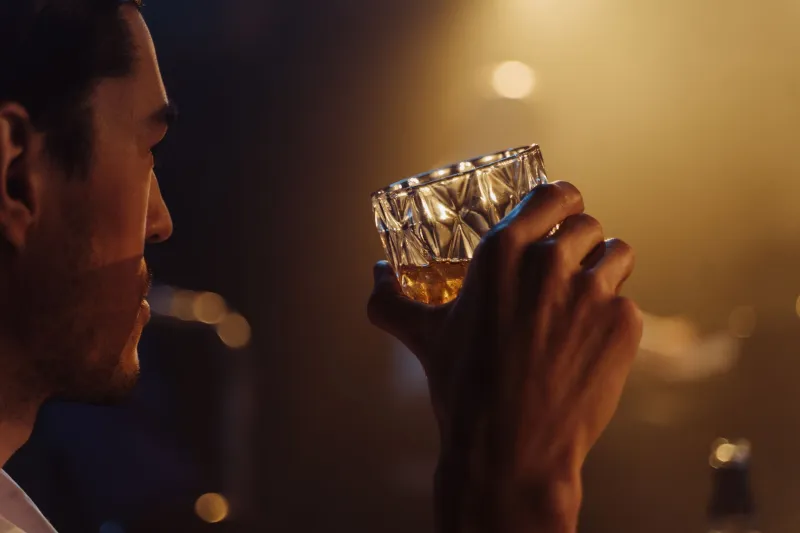
For this crowd, sipping a well-made vodka neat — or over a single large cube — is a deliberate act. It signals that you know what's in the glass. It says you're not in a hurry. And in a culture that rewards busyness as a personality trait, choosing to slow down is genuinely countercultural.
That's a kind of status that money alone can't manufacture. It has to be earned through curiosity.
What You're Actually Missing When You Shoot
Here's what happens when you sip rather than shoot. The spirit hits your palate in stages. First the initial impression — is it clean? Is there a subtle sweetness, or does it lean dry and mineral? Then the mid-palate opens up, and you start catching the grain character, the texture, the weight of the liquid. Finally, the finish arrives, and that's where a truly well-made vodka distinguishes itself from the rest. A long, warm, clean finish is the whole ballgame.
None of this is accessible in a shot. The flavor compounds don't have time to register. Your brain is already bracing for the burn instead of processing the complexity. You essentially paid for a concert ticket and spent the whole show staring at your phone.
The ritual of sipping forces a different kind of attention. It asks something of you. And what it gives back is proportional to what you bring.
Ritual Is the New Luxury
Look at how the broader luxury market is moving right now. People aren't just buying objects — they're buying experiences, processes, and stories. The coffee world figured this out years ago. Specialty roasters don't just sell beans; they sell a ritual around preparation, temperature, and tasting notes. The same shift is happening in spirits.
When you pour a measure of Killer Queen Vodka and take a moment to actually engage with it — notice the clarity, the viscosity, the way it settles in the glass — you're participating in something that goes beyond drinking. You're practicing appreciation. And that practice, repeated over time, builds a genuine palate and a genuine preference.
That's the real flex. Not the label on the bottle, but the knowledge behind the pour.
How to Actually Start Sipping
If you've spent years in shot culture, transitioning to intentional tasting doesn't have to be complicated. A few practical shifts make all the difference.
Temperature matters. Vodka served ice-cold numbs the palate and mutes the very characteristics worth tasting. Try it slightly chilled — pulled from the freezer ten minutes before pouring, or served over a single large cube that melts slowly rather than diluting aggressively. You'll taste more.
Glass shape isn't trivial. A small tulip-shaped glass or even a short rocks glass concentrates aroma in a way a shot glass never could. The nose is part of the experience, and it's often the first place you detect quality.
Give it a moment. Let the spirit sit for thirty seconds before you taste. Let it breathe. This isn't wine-nerd theater — it genuinely opens up the flavor profile.
Sip small and hold briefly. You don't need to swirl and contemplate for five minutes. Just let the liquid coat your palate before swallowing. That's all it takes to start registering the difference between vodkas.
The Bigger Picture
The slow-drinking movement isn't about being snobbish or precious. Nobody's saying you can't have fun. But there's a difference between fun that's intentional and fun that's reflexive — between a drink that means something and one that's just habit.
America's relationship with alcohol is evolving. Moderation is increasingly framed not as deprivation but as sophistication. Drinking less, but drinking better, is becoming the dominant ethos among consumers who care about what they put in their bodies and what it says about who they are.
In that context, reaching for a premium bottle and actually tasting it isn't just a personal preference. It's a whole philosophy — one that values experience over excess, presence over pace, and substance over spectacle.
The shot glass had a good run. But the sip is where the crown belongs.