Homegrown and Unapologetic: The American Craft Vodka Movement Is Rewriting the Rules
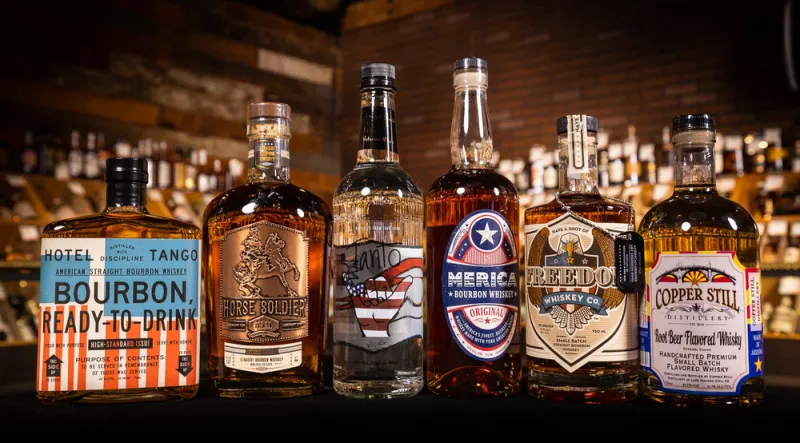
Photo: American craft distillery small batch vodka production grain spirits, via gacraftspirits.com
There's a version of the vodka world that looked like this: prestige came from overseas, tradition belonged to Eastern Europe, and anything made stateside was considered a step down from the real thing. For a long time, that narrative stuck. And for a long time, American distillers played by rules they didn't write.
That era is over.
Across the country — from the wheat fields of Kansas to the corn belts of Kentucky to the small-batch operations dotting the Pacific Northwest — a generation of American craft distillers is doing something quietly radical. They're not trying to out-European the Europeans. They're building something entirely their own, and in doing so, they're redefining what the word "premium" actually means in a glass of vodka.
The Old Definition of Premium Was Always a Little Shaky
Let's talk about what "premium" used to signal. For most of the late 20th century, premium vodka was defined almost entirely by geography and marketing. If it came from Russia, Poland, or Scandinavia, it carried an automatic credibility boost — regardless of what was actually in the bottle. Slick advertising campaigns, frosted glass packaging, and celebrity endorsements did the rest of the heavy lifting.
None of that had much to do with the liquid itself.
The craft movement — which reshaped American whiskey, gin, and rum before it fully arrived in vodka — is now applying a different standard. Premium, in the craft distiller's vocabulary, means traceability. It means knowing where the grain came from, how it was grown, who grew it, and why those choices matter to the final flavor. It means small-batch production where a human being is making decisions at every stage, not just pushing buttons on an industrial line.
That's a fundamentally different value proposition, and American consumers are starting to get it.
Heritage Grains Are Having a Moment
One of the most interesting things happening in American craft vodka right now is the revival of heritage and heirloom grains. While mass-market vodka often leans on commodity corn or neutral grain spirits with no particular origin story, craft distillers are going in the opposite direction.
Red Fife wheat. Bloody Butcher corn. Emmer. Einkorn. These aren't just fun names — they're grains with distinct flavor profiles that survived the industrial farming era largely because a small group of farmers and food preservationists refused to let them disappear. When distillers work with these grains, they're not just making vodka. They're participating in a longer American story about land, agriculture, and what we choose to grow and protect.
The result in the glass is a vodka that actually has something to say. Subtle, yes — vodka is by definition a relatively neutral spirit — but the difference between a heritage grain vodka and a commodity grain vodka is real and perceptible to anyone paying attention.
Local Storytelling as a Competitive Advantage
Here's something the big European houses can't replicate: a genuine American sense of place. And craft distillers are leaning into that hard.
When a distillery in Montana sources its water from a specific mountain aquifer, or a Texas operation uses locally grown winter wheat and can take you to the farm where it was harvested, that's a story with roots. It's verifiable. It's personal. And in a market saturated with brands that all claim to be "exceptional" and "handcrafted," specificity is its own kind of luxury.
This is where the cultural shift gets interesting. American consumers — especially younger ones — have become increasingly skeptical of vague prestige claims. They want to know what's real. They want to understand what they're buying and why it matters. The craft vodka movement speaks directly to that impulse in a way that legacy imported brands, with their carefully constructed mystique and global marketing budgets, often can't.
Innovation Without Apology
Another thing the American craft scene has going for it: a willingness to experiment that doesn't feel constrained by tradition. European vodka has centuries of history, which is genuinely impressive — but it can also function as a kind of creative ceiling. American distillers, relatively unburdened by that weight, are trying things.
Multiple distillations at different proofs to capture different flavor compounds. Unconventional base ingredients — grapes, apples, honey, even quinoa. Aging in used barrels for limited-release expressions that push the legal and stylistic definition of vodka. Some of these experiments don't pan out. But the ones that do are genuinely exciting, and they're expanding what people believe vodka can be.
At Killer Queen Vodka, we sit squarely in this tradition. The idea that a spirit has to come with an imported pedigree to be worth your respect — or your glass — is exactly the kind of assumption we're here to challenge. The throne doesn't belong to geography. It belongs to craft, intention, and a refusal to settle for ordinary.
What This Means for the Consumer
If you've been reflexively reaching for an imported label because that's what you've always associated with quality, it's worth pausing and asking whether that association is still earning its keep. The American craft vodka scene has matured significantly. The production quality is there. The ingredient sourcing is often more transparent than what you'll find from large-scale European producers. And the stories behind these bottles are genuinely worth knowing.
That doesn't mean every American craft vodka is automatically better than every imported option. Quality is always individual, not categorical. But the days when "made in America" was a liability for a premium spirits brand are well behind us.
The Reign Is Shifting
What's happening in American craft distilling right now isn't just a market trend. It's a cultural recalibration — a reassertion that excellence isn't something you import. It's something you build, grain by grain, batch by batch, with the kind of care and conviction that shows up in the final pour.
The next time you're choosing a bottle, look past the label's accent. Ask where it came from, how it was made, and what the people behind it actually believe about their craft. You might be surprised how often the most compelling answers are coming from right here at home.